Advances in Digital Photography in Space

Holy Wow!

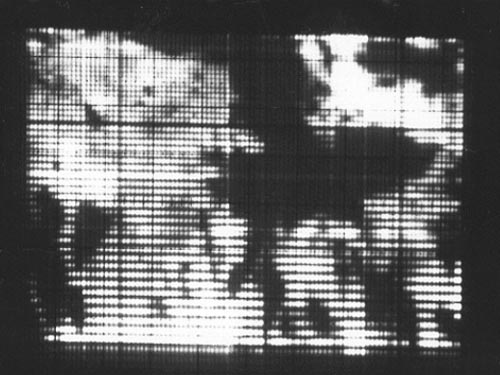
NewScientist had an article a little while ago on the advancement of digital imagry in space.  It’s amazing!  I had no idea that we were that far along back in 1974. Even though first digital camera I had (newer by 26 years) beats the socks off the first space image, it’s still impressive considering it was taken from a spaceship and transmitted back to earth in 1974.

first-digital-image-of-the-moon

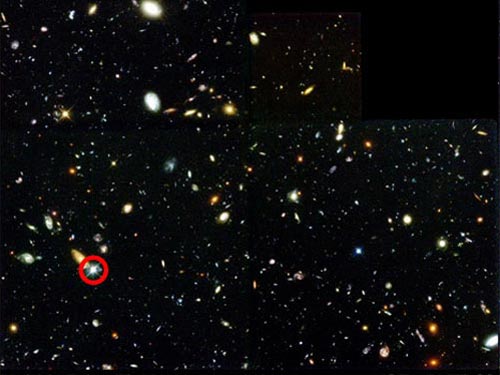
What’s even more impressive, is how far we’ve come since then.  The Hubble Deep Space image is a long exposure of only a tiny little section of space that reveals just how small we really are in relation to what’s out there.  The image shows thousands of other galaxies, some which appear to be much larger than our own Milky Way.

deep-space-image
click here to view the High Resolution version

I can’t wait to see what another 30 years will bring.

2 Amazing Time-Lapse Videos from Ben Wiggins

Ben Wiggins has created two of the most stunning Time-Lapse videos I’ve ever seen.  Take a look.

Summer in San Francisco:

http://vimeo.com/moogaloop.swf?clip_id=6601409&server=vimeo.com&show_title=1&show_byline=1&show_portrait=0&color=&fullscreen=1

Another Cloud Reel… from Delrious on Vimeo.

Burning Man 2009:

http://vimeo.com/moogaloop.swf?clip_id=6636389&server=vimeo.com&show_title=1&show_byline=1&show_portrait=0&color=&fullscreen=1

Evolution (Burning Man time lapses) from Delrious on Vimeo.

RIT Big Shot 25

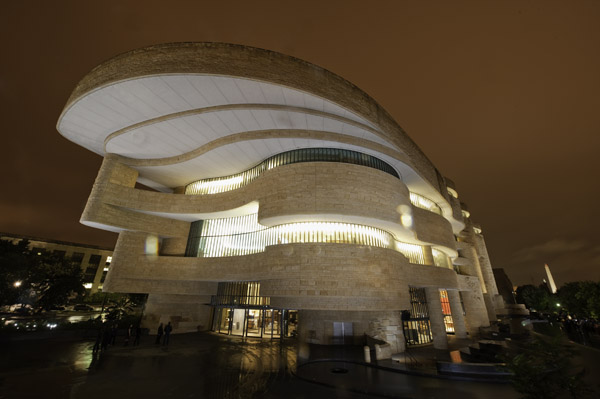
BigShot25Today was RIT’s 25th Big Shot, of the Smithsonian National Museum of the American Indian in Washington, D.C..  I loved being a part of it last year, but this year I’m glad I skipped the trip to DC.  To be honest, I’m not really a fan of this one.  Don’t get me wrong, there’s nothing I see technically wrong with the photo.  It just seems like an uninteresting subject to me.

I loved last years though, which was the first one I participated in, and many of the other Big Shots.

My New Photography Equipment

Original EquipmentEven though I’ve been into Photography for quite a while, I only recently took the plunge into the realm of DSLRs.  Ever since then I’ve been making use of the 28-135mm kit lens which has worked out great.  However; due to the upcoming weddings and our upcoming trip to the Pacific Northwest I’ve been on the lookout for new equipment.

Last week I happened upon a great deal on Craigslist.  A woman was getting rid of her old Canon 35mm Film SLR along with all the lenses, flash and camera bag.  It came with a 50mm F1.8 (one of the lenses I’d been watching for, although I was more interested in the 1.4) a slide in-out 70-210mm F4 and a Speedlite 420 EZ.

The equipment isn’t the greatest, it’s rather old and fairly low-end but it will do just fine for a while.  The 50mm alone made the deal worth it.  Either way I decided to purchase it and add the stuff to my inventory.

New EquipmentI’ve also been examining wide angle lenses.  Unfortunately I haven’t found any used lenses that were wide enough for me.  Because of our upcoming trip to some of the most scenic places in the US, I decided to pursue new ones.  There have basically been 2 I was interested in (that I could afford).  The Sigma 10-20mm and the Tokina 12-24mm.  After tossing them back and forth in my head and reading lots of reviews I finally decided on the Tokina 12-24mm.  My first impression is nothing short of excellent.  It definitely seems wide enough and the build quality is superb.  I also enjoy the different type of manual focus mechanism.  I’ll probably post a review of it once I get the chance to try it out a bit more.

In just a few short days I’ve quadrupled the amount of photography equipment I have.  The only downside is now I need to find a place to keep it all.

I’m very excited to play with and learn my new toys.  I posted a few test shots in the slideshow below. Most of the shots were taken with the new Flash which requires Manual mode so some are a little overexposed as I get used to it.

http://www.flickr.com/apps/slideshow/show.swf?v=71649

Vertical Shutter Slit Photography

I’ve been reading Derek Miller’s blog for a while now and I love his Camera Works series.  Most of the stuff he posts in the series I already have a pretty good handle on but he does an excellent job describing (and simplifying) exactly how Cameras (and photography) work. Back in September he posted an article about Shutters, Flashes and Sync Speed.  Although I have a general knowledge of how all 3 work Derek provided a great in-depth write-up.  I have no idea how I missed it before but I read it today and it’s fantastic!

One key idea I’ve never really understood is how camera’s overcome their technical (mechanical) limitation on shutter speed.  Derek provides exactly the write-up I needed.  Essentially they don’t, they just use 2 shutters at the same time (both moving in the same direction) to allow a ‘slit’ of light through rather than expose the entire frame/sensor at a time.

If a subject is moving fast enough and the slit is moving slow enough, this can result in some interesting photographs, like this famous 1913 Photograph by Jacques-Henri Lartigue.

lartigue_car_trip

As Derek writes, this is an exaggerated effect and will most likely never be so dramatic with today’s cameras DSLRs without something moving at extreme super-sonic speeds.

Please visit Derek’s site for the full write-up.

EDIT: Derek was kind enough to stop by and suggest that this discussion really only applies to DSLRs (or Film Cameras ::Gasp::) since they’re the only ones with mechanical shutters.  Most (if not all) point & shoot cameras (including your cell-phone cameras) simply turn the sensor on and off.  Some of these electronic means of exposing the sensor even go slow enough to produce the same effect.  See the background of the following photo shot with my iPhone:

Warped iPhone photo

Each one of those slanted boxes should be a perfect rectangle.

We've come a long way (Photographically)


View from a window at Le Gras – 1826

We’ve come a long way in the world of photography. The photo above is the first known permanent photograph.

The photo was captured by a camera obscura focused onto a sheet of 20 × 25 cm oil-treated bitumen. Due to the 8-hour exposure, the buildings are illuminated by the sun from both right and left.

An 8-hour exposure! Now we take photos with an exposure time of under 1/60th of a second or faster and we can see the results immediately.

My friend Ryan shared an excellent website about photos that changed the world.  I’d say the first ever permanent photograph qualifies.

The All New Canon XSi

I haven’t been able to try it out yet but the new Canon XSi looks to be a nice upgrade from the Xti. The enhancement to 12mp and the move to SD media alone is worth it, not to mention the other enhancements.

Canon XSi

Maybe this will be my first step into the world of DSLRs instead of the 40D I want so badly? We’ll see, although at this point I think I’d outgrow the XSi much too quickly to warrant the purchase now instead of waiting a little longer to purchase the one I really want (the 40D).

Details below to save you the jump.

  • 12.2 effective Megapixel CMOS sensor
  • Supports all EF and EF-S lenses
  • Uses new 14-bit A/D converter, improved AF sensor (still 9-point), and DIGIC III image processor
  • 3-inch LCD display (230k pixels) with live view and contrast detect autofocus
  • Full manual controls; ISO range of 100 – 1600
  • Can shoot at 3.5 frames/second for up to 6 RAW or 45 JPEGs
  • Auto Lighting Optimizer corrects image brightness and contrast automatically
  • New spot metering (4%) option
  • Same dust reduction system as the XTi
  • Uses SD/SDHC memory cards (instead of CompactFlash)
  • Optional battery grip
  • Uses LP-E5 lithium-ion battery; 500 shots per charge
  • USB 2.0 High Speed support
  • Shipping in April for $799 body only, and $899 with the new 18-55 IS lens; comes in silver and black

The 2 Billionth Flickr Photo

It’s interesting to see the 1st or a significant nth item posted to any service. So often though they turn out like the first youtube video. A waste of space. It’s nice to see when a milestone is actually something worthwhile. That’s the case with the 2 billionth flickr photo. It was posted a while ago I just haven’t had the chance to post it yet. Here it is:

Originally uploaded by yukesmooks Just in case you were wondering how to find the Nth Flickr photo simply use the following:

http://flickr.com/photo.gne?id=XXXXXX

Simply replace the X’s with the photo number you want to take a look at.

Let your words be few, and your exposures many

Sony DSC H5

For a while now I’ve been using my trusty H5 and I’ve learned quite a bit about photography. I bought my H5 because it’s essentially an SLR without the interchangeable lens and flash hot shoe. Both of these features are very important, however the lens built into the H5 is a 36mm-432mm (35mm equivalent) and the flash is actually quite versatile. I can step the flash up and down in power with a total of 10 steps. This all comes included for the small price of $500 (retail price when purchased over a year ago). The same setup with an SLR would have easily run me in the thousands and at the time I wasn’t sure I wanted to dedicate that much money into my new hobby just yet.

The H5 has been a wonderful learning tool, and I truly feel everyone who wants to delve into photography should take a Full Featured as their first real step. It (cheaply) allows you a very wide range in the type of shots you can take, so you find out whether or not its something you really want to do and if so, what type of shots you like to take. If you buy a full featured camera like the H5 and you find yourself leaving it in ‘auto’ mode all the time you’ll be missing out on a lot of really wonderful shots. You probably wouldn’t benefit much from the switch to an SLR either.

That brings me to my next tidbit. I will be retiring the H5 soon. I’ve decided I need to make the switch. I have been looking for a while and thought I had decided on the Canon 30D. Until this morning. The only thing lacking in the 30D is a high resolution sensor. I loved the camera, the feel of it, the screen size, feature set, speed everything. However; I felt that if I were going to switch to an SLR I wanted at least 10 megapixels. Everyone is going to say:

but it doesn’t really matter, 3 or 4 is plenty 90% of the time!

And they’d be right, for 90% of people taking photographs. However; by making the switch to an SLR I’m taking one (small) step towards attempting to make money with my hobby. To do so I need to be able to print very large, and make very small crops. Therefor I need as much detail in the shots as possible.

This morning amazon slipped up and accidentally announced the Canon EOS 40D ahead of schedule. This camera is a thing of beauty (providing the accidentally leaked info is accurate). The three main upgrades from the 30D that I’m concerned about are:

  • Increased efficiency 10.1-megapixel CMOS sensor with larger microlenses
  • Large 3.0-inch LCD display
  • 6.5 frame-per-second continuous shooting capability

For a full breakdown of the features (as temporarily listed by amazon) click here.

Looks like I might have found my new baby.

The 40D - Top The 40D - Back