You are currently browsing the Randys Blog blog archives for June, 2009


Perspective and Patience – When a Soldier Comes Home

My friend Victoria sent this to me and I felt I had to share it.  Too often we let the little things get the better of us.  Thinking about the soldiers and what they go through might be a good way to keep some perspective and some patience.

When a Soldier Comes Home
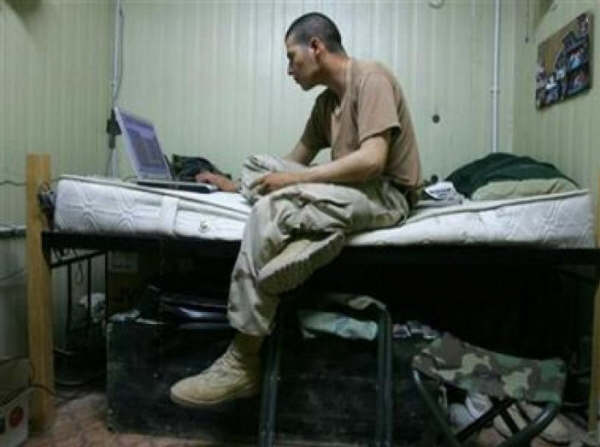
image001

When a soldier comes home he finds it hard…
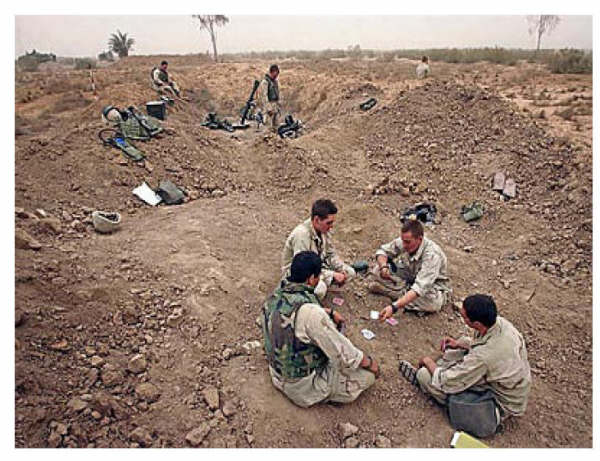
image002

…To listen to his son whine about being bored.

image003

…To keep a straight face when people complain about potholes.

image004

…To be tolerant of people who complain about the hassle of getting ready for work.

image005

…To be understanding when a co-worker complains about a bad night’s sleep.

image006

…To be silent when people pray to God for a new car.
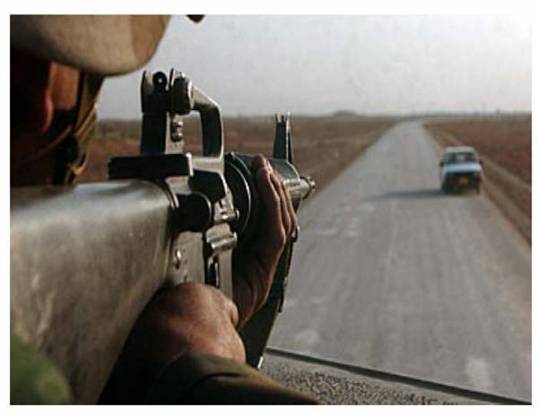
image007

…To control his panic when his wife tells him he needs to drive slower.

image008

…To be compassionate when a businessman expresses a fear of flying.

image009

…To keep from laughing when anxious parents say they’re afraid to send their kids off to summer camp.

image010

…To keep from ridiculing someone who complains about hot weather.

image011

…To control his frustration when a colleague gripes about his coffee being cold.

image012

…To remain calm when his daughter complains about having to walk the dog.

image013

…To be civil to people who complain about their jobs.

image014

…To just walk away when someone says they only get two weeks of vacation a year.
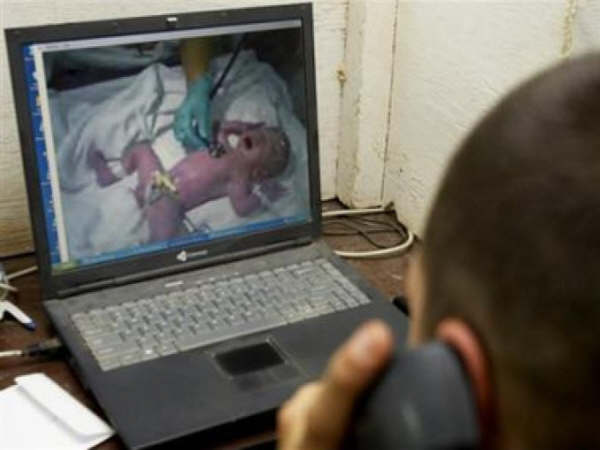
image015

…To be forgiving when someone says how hard it is to have a new baby in the house.

The only thing harder than being a Soldier…

image016

is loving one.

image017

My New Photography Equipment

Original EquipmentEven though I’ve been into Photography for quite a while, I only recently took the plunge into the realm of DSLRs.  Ever since then I’ve been making use of the 28-135mm kit lens which has worked out great.  However; due to the upcoming weddings and our upcoming trip to the Pacific Northwest I’ve been on the lookout for new equipment.

Last week I happened upon a great deal on Craigslist.  A woman was getting rid of her old Canon 35mm Film SLR along with all the lenses, flash and camera bag.  It came with a 50mm F1.8 (one of the lenses I’d been watching for, although I was more interested in the 1.4) a slide in-out 70-210mm F4 and a Speedlite 420 EZ.

The equipment isn’t the greatest, it’s rather old and fairly low-end but it will do just fine for a while.  The 50mm alone made the deal worth it.  Either way I decided to purchase it and add the stuff to my inventory.

New EquipmentI’ve also been examining wide angle lenses.  Unfortunately I haven’t found any used lenses that were wide enough for me.  Because of our upcoming trip to some of the most scenic places in the US, I decided to pursue new ones.  There have basically been 2 I was interested in (that I could afford).  The Sigma 10-20mm and the Tokina 12-24mm.  After tossing them back and forth in my head and reading lots of reviews I finally decided on the Tokina 12-24mm.  My first impression is nothing short of excellent.  It definitely seems wide enough and the build quality is superb.  I also enjoy the different type of manual focus mechanism.  I’ll probably post a review of it once I get the chance to try it out a bit more.
In just a few short days I’ve quadrupled the amount of photography equipment I have.  The only downside is now I need to find a place to keep it all.

I’m very excited to play with and learn my new toys.  I posted a few test shots in the slideshow below. Most of the shots were taken with the new Flash which requires Manual mode so some are a little overexposed as I get used to it.

Vertical Shutter Slit Photography

I’ve been reading Derek Miller’s blog for a while now and I love his Camera Works series.  Most of the stuff he posts in the series I already have a pretty good handle on but he does an excellent job describing (and simplifying) exactly how Cameras (and photography) work. Back in September he posted an article about Shutters, Flashes and Sync Speed.  Although I have a general knowledge of how all 3 work Derek provided a great in-depth write-up.  I have no idea how I missed it before but I read it today and it’s fantastic!

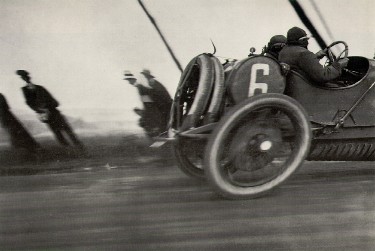
One key idea I’ve never really understood is how camera’s overcome their technical (mechanical) limitation on shutter speed.  Derek provides exactly the write-up I needed.  Essentially they don’t, they just use 2 shutters at the same time (both moving in the same direction) to allow a ‘slit’ of light through rather than expose the entire frame/sensor at a time.

If a subject is moving fast enough and the slit is moving slow enough, this can result in some interesting photographs, like this famous 1913 Photograph by Jacques-Henri Lartigue.

lartigue_car_trip

As Derek writes, this is an exaggerated effect and will most likely never be so dramatic with today’s cameras DSLRs without something moving at extreme super-sonic speeds.

Please visit Derek’s site for the full write-up.

EDIT: Derek was kind enough to stop by and suggest that this discussion really only applies to DSLRs (or Film Cameras ::Gasp::) since they’re the only ones with mechanical shutters.  Most (if not all) point & shoot cameras (including your cell-phone cameras) simply turn the sensor on and off.  Some of these electronic means of exposing the sensor even go slow enough to produce the same effect.  See the background of the following photo shot with my iPhone:

Warped iPhone photo

Each one of those slanted boxes should be a perfect rectangle.

Another Reason…